


How Much Does a Hot Melt Adhesive Production Line Cost? An Honest Answer from the Manufacturer
"How much does a hot melt adhesive production line cost?" is the first question almost every buyer asks, and the only honest answer from a real manufacturer is: it depends on the configuration, so a number without context will be wrong. A line that makes pellets, one that makes blocks or pillows, and a PUR reactive line are not the same machine with a different price tag — they are different equipment lists.
This article will not give you a figure pulled from a catalogue. It will do something more useful: show you exactly what determines the number, so you can compare quotations on equal terms and know which questions to ask.
Why there is no single price for a hot melt line
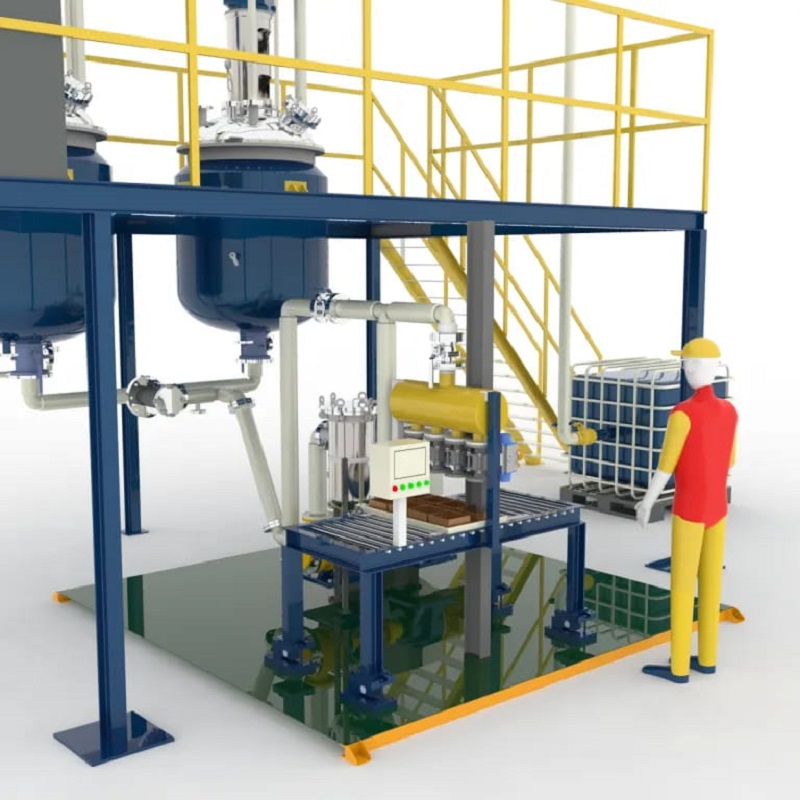
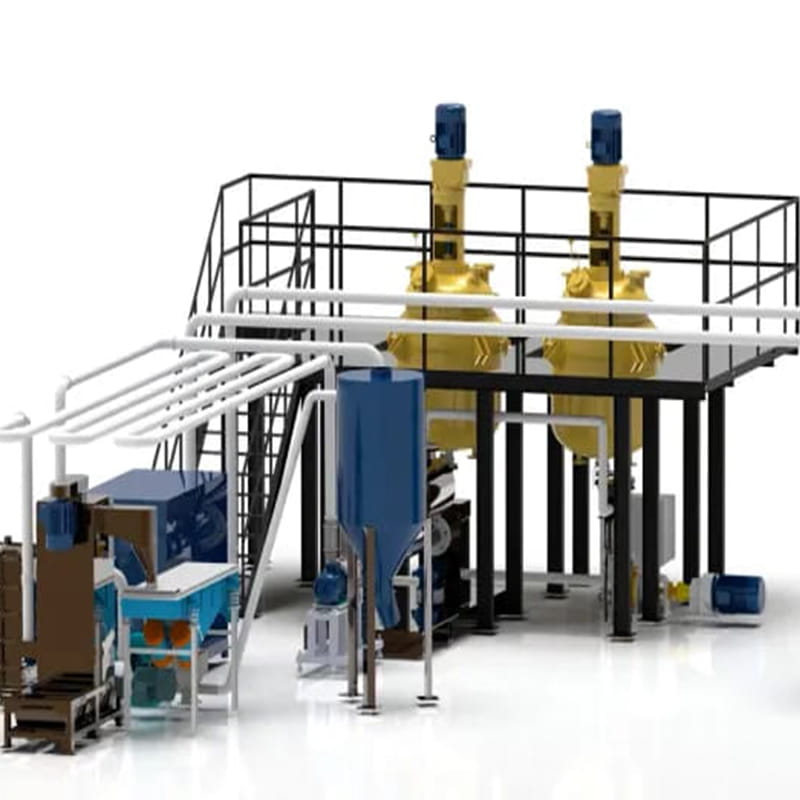
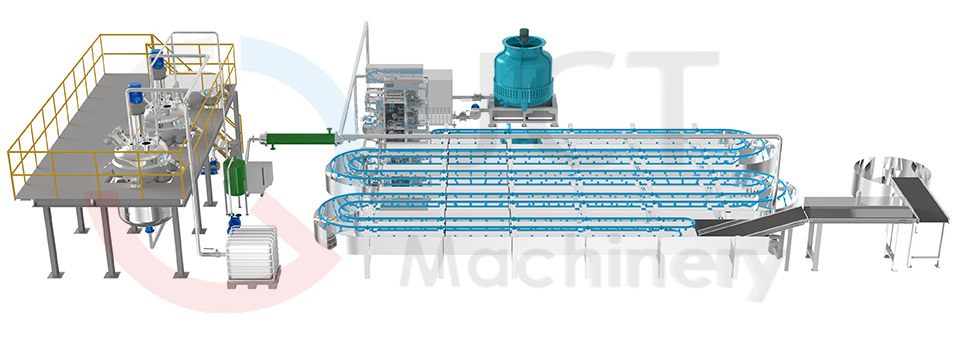
A hot melt adhesive production line is an integrated system, not a single vessel. It typically covers feeding, melting or reaction, dispersion, de-airing, discharge and final forming and packaging. Every one of those stages can be configured in more than one way, and each choice changes the equipment list — and therefore the cost.
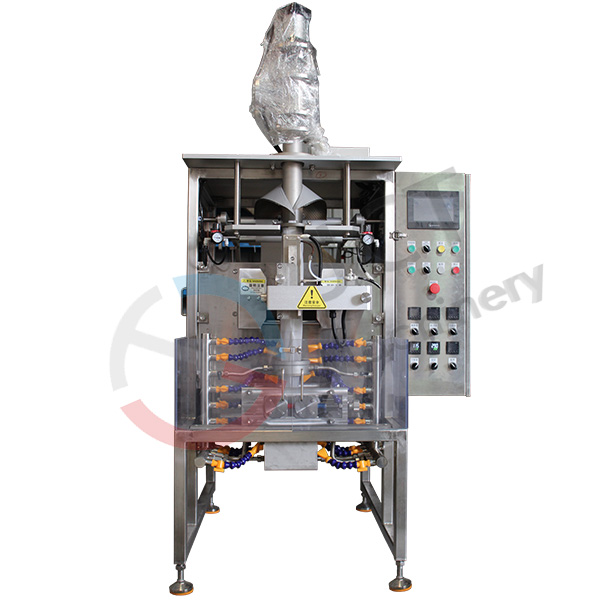
Consider the product form alone. A pelletizing line needs a melt pump, hydraulic screen changer, underwater pelletizing die and cutter, cooling water circuit, material separator, dewatering machine and chiller. A block or pillow line instead needs a filling machine, weighing and bag-forming section, cooling channel, conveyor and blow-drying unit. A PUR reactive line adds metering tanks, metering pumps, a distillation column, condenser and vacuum equipment. These are not optional accessories; they are the difference between three different factories.
That is why any supplier who quotes you a flat price before seeing your product form, capacity and material is either guessing or quoting a different line than the one you need.
The five factors that actually move the cost
When we scope a hot melt adhesive line, the configuration settles around five variables. These are the same variables you should use to compare any quotation.
1. Reactor capacity and batch size. Our catalogue covers hot melt lines from 300 L (PUR) and 500 L up to 1000 L, 1300 L, 2300 L and 3500 L reactor configurations. Even within the same nominal 1000 L line, a 10 mm-wall vessel with a DN300 feed opening and a 12 mm-wall vessel with a DN400 feed opening are documented as two different configurations. Capacity sets the size of the vessel, the drive and the heating system — the largest single cost block.
2. Product form and downstream equipment. Granule, block, pillow and PUR each require a different finishing section, as described above. The equipment count alone can range from a compact line to one with forty or more listed items. Ask for the full equipment list, not just the reactor volume.
3. Material contact parts and corrosion requirement. Contact surfaces are specified in stainless steel — SUS304 is standard in our configurations, and 904L is available as an option for corrosive formulations on selected machines. The choice of contact material, wall thickness and seal arrangement directly affects fabrication cost. If your formulation is solvent-based or corrosive, say so at the enquiry stage; retrofitting later is far more expensive than specifying up front.
4. Automation and control level. A basic line uses local motor and temperature control. A turnkey line adds PLC control, recipe management and a protected program so batches are repeatable and the process does not depend on one operator. The gap between these two is real, and it should be a deliberate decision rather than an assumption buried in a quotation.
5. Heating method, vacuum and site conditions. Electric jacket heating, external circulating oil heating and furnace-heated systems are different propositions. Vacuum level, chiller capacity, voltage standard and any explosion-proof requirement all move the configuration. Export orders also need additional packing and documentation time.
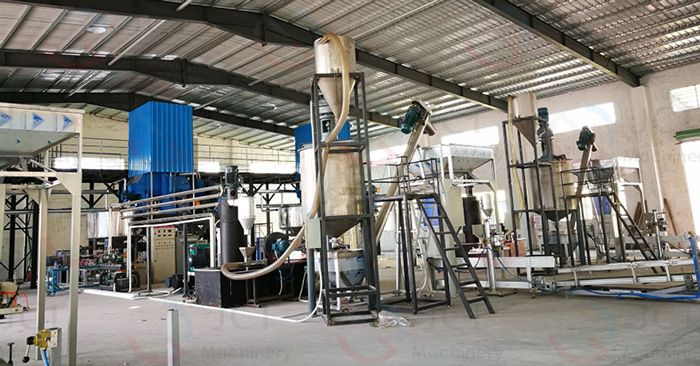
How JCT builds and prices a line
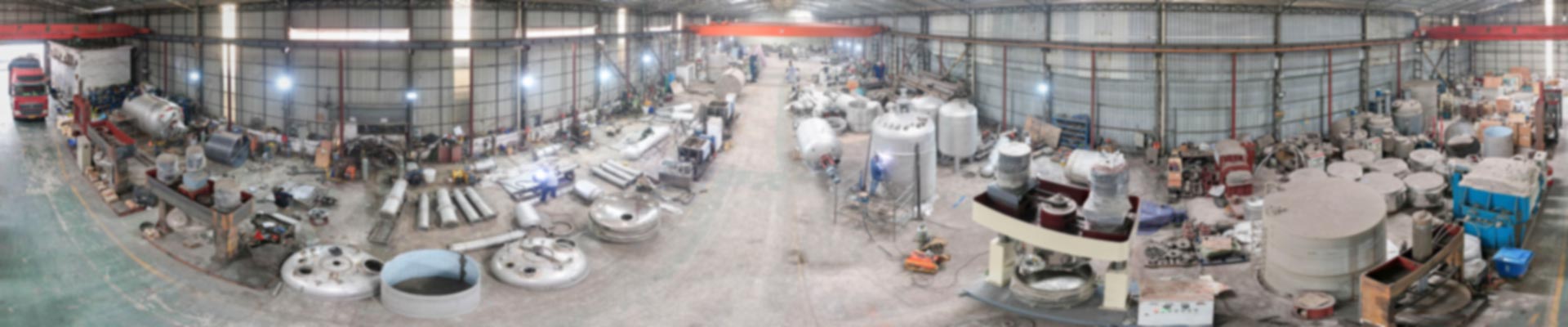
We are a source factory for high-viscosity mixing equipment and a turnkey line integrator — we don't just sell machines, we make your production line run. Established in May 2006, we have twenty years in mixing, dispersing, kneading and reacting equipment, and design, machining, welding, assembly and trial running are done in our own plant in Foshan. Customers are welcome to bring their own material for a trial run.
Our quotation process is deliberately gated, because a price issued before the scope is fixed protects nobody:
- Your product, material and target capacity are confirmed.
- The supply scope is defined — which stages are included, and at what configuration.
- A 3D process demonstration is produced, with drawings issued within three days of process confirmation.
- The equipment list is checked line by line so nothing is missed or double-counted, then a tailored quotation is issued.
This is why we do not publish a price list. Price depends on capacity, material contact parts, automation level and supply scope — a figure without those four things is not a quotation, it is a guess.
What stands behind the equipment
The reasons buyers commission a line from us are the ones that are verifiable:
- 20 years of focus since 2006; a team of about 50 including engineers and production staff.
- 3,000+ customers served, from single-machine buyers to turnkey plant investors.
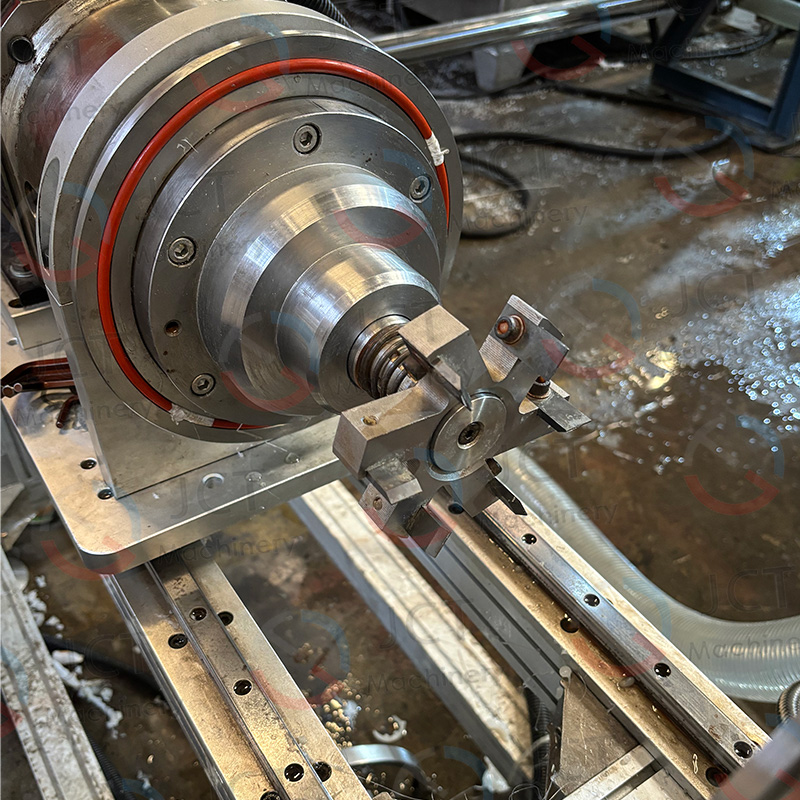
- 17 utility model patents and 2 software copyrights, including a heating device for hot-melt adhesive reactors and a cutting device for stick hot-melt adhesive production.
- Equipment from 5 L lab models to above 10,000 L industrial units; motors from 1.5 to 160 kW.
- Blade-to-wall clearance of 2–3 mm, vacuum down to ≤ -0.096 MPa, jacket pressure ≤ 0.6 MPa.
- 10+ automated production lines delivered, with line customization representing 95% of orders.
- Quality and environmental management systems certified to ISO 9001 and ISO 14001, with CE marking on equipment; A-level tax credit rating for 2023 and 2024.
Delivered hot melt lines
Our equipment has been exported across North America, Europe, Africa, Southeast Asia, the Middle East, the CIS and South America. Among published hot melt projects, a producer in Russia commissioned an underwater pelletizing line with a 2000 L screw-discharge kneader and a 2200 L reactor, reported as its fifth order with us.
If your target market has no published case, we still support the project directly: trial runs with your material in our plant, engineering review before quotation, and remote diagnosis after commissioning.
Budgeting timeline and support
Beyond the machine price, buyers should plan for the full project window. Standard machines ship in around 30 days; custom lines take 90 days, with 7–15 additional days reserved for export packing and documentation. Factory visits can be arranged with 3–5 days' notice so an engineer is present. Installation, commissioning and operator training are part of the scope, together with 3 years of after-service support.
One practical note on comparing budgets: ask every supplier to state what is excluded — chiller, water treatment, site utilities, spare parts and freight are common sources of a "cheaper" quotation that grows after signature.
Get a number that matches your line
So, how much does a hot melt adhesive production line cost? Send us your product form, formulation type, target batch size and hourly output, plus your voltage standard and any explosion-proof requirement. We will return a checked equipment list, a 3D process layout and a tailored quotation — a number built for your line, not an average taken from someone else's.