Best Hot Melt Glue Production Line Equipment Manufacturer
Tel: +8618138373963 | jctmixing@outlook.com

 JCT
JCT  2026-10-14


Pillow-shaped hot-melt adhesives are primarily based on EVA, APAO, or SBC thermoplastic elastomers, formulated with modifiers such as tackifying resins and petroleum waxes. When heated and blended at temperatures between 150°C and 180°C, the system's dynamic viscosity typically ranges from 5,000 to 150,000 cP, characterizing it as a high-viscosity, flowable melt.
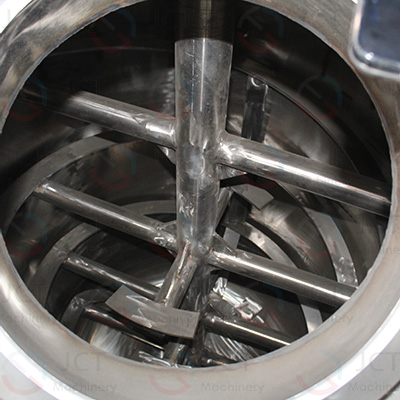
Tackifying resins and waxes in hot-melt adhesive formulations are highly temperature-sensitive.
For pillow hot melt glue, the downstream process requires feeding the material into a molding machine or underwater pelletizing system using a high-pressure transfer pump.
| Comparison Criteria | Reactor | Sigma Mixer |
| Material Suitability | High-viscosity meltable fluids (5,000–300,000 cP) | Ultra-high viscosity plastomers/rubber masses (>1,000,000 cP) |
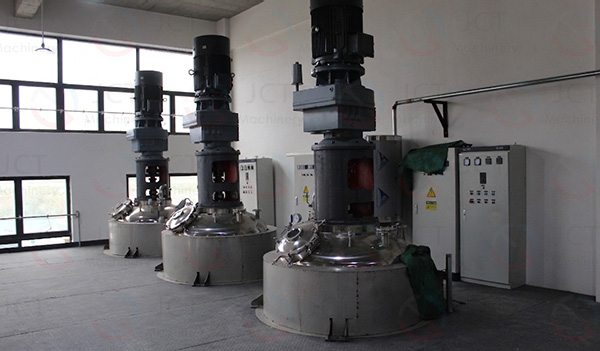
| Mixing Efficiency of Entire Vessel | Powerful mixing (axial twin-ribbon agitator driving a comprehensive, large-scale 3D circulation throughout the vessel) | Weak (localized high shear; low-viscosity melts prone to slippage) |
| Vessel Volume vs. Production Capacity | Proven capability for large-scale industrial production (3,000 L–15,000 L) | Typically 200L–2,000 L; ultra-large capacities are costly |
| Discharge and Pumping Integration | Bottom discharge outlet connects seamlessly directly to the gear pump and forming line | Slow discharge, high residual material, and difficult integration with automated pumping systems |
| Return on Investment (ROI) | Reasonable equipment cost, stable structure, and low maintenance costs | Heavy-duty gears and bearings prone to wear; high investment and maintenance costs |
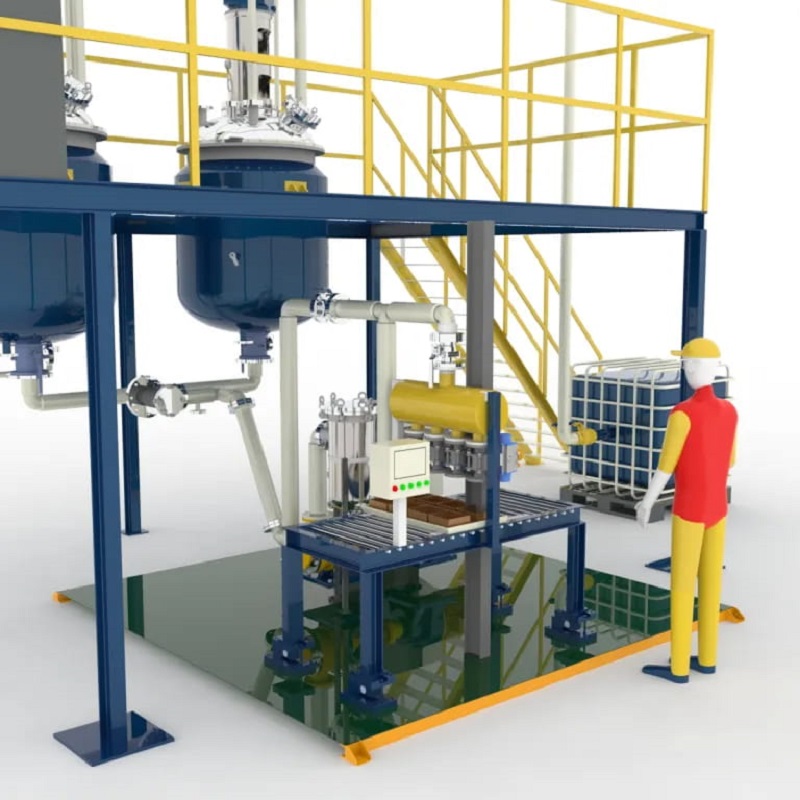
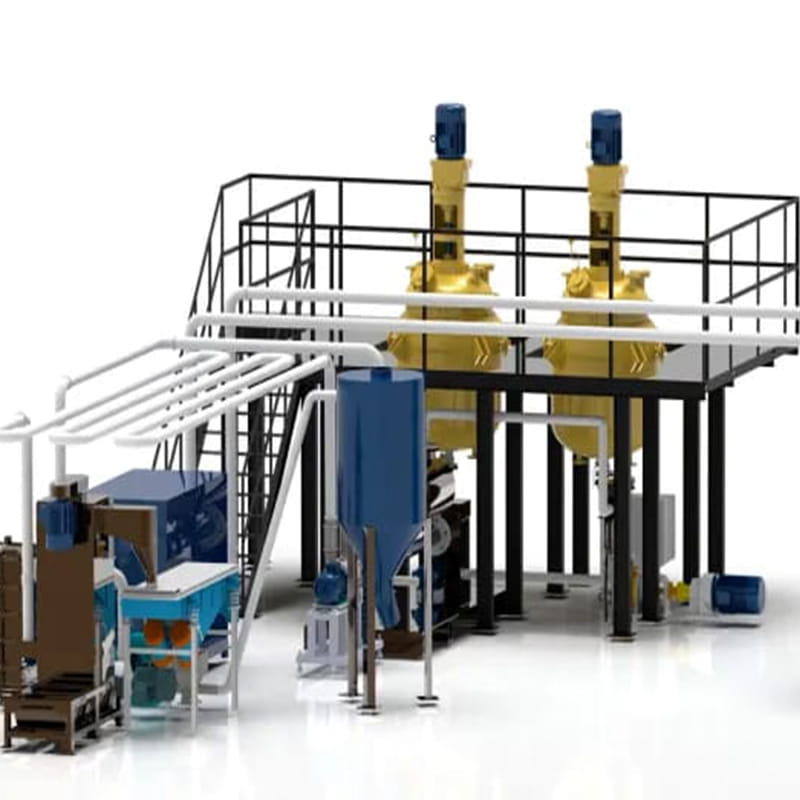
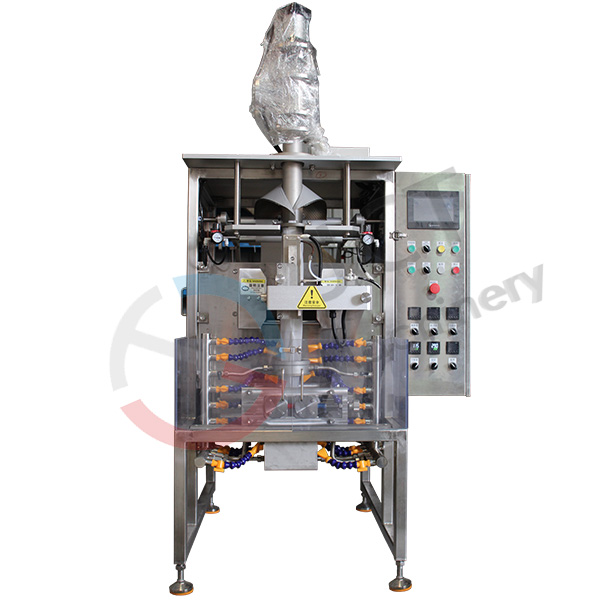
Building a highly efficient and stable pillow hot melt glue production line is far more than simply purchasing a reaction kettle; it is a comprehensive system engineering project encompassing everything from raw material melting to automated packaging.
Tel: +86-181 3837 3963 (Whatsapp, Wechat)
Email: jctmixing@outlook.com
24-hour service hotline

Tel: +86 18138373963
Add: Donglian Jincheng Industrial Zone, Danzao Town, Nanhai District, Foshan City, Guangdong Province, China